Cruising in Modesto became a repeated social route rather than a single event. Young drivers used city streets as moving gathering places, seeing friends, displaying cars, and looping past familiar businesses. Municipal history connects that practice to the world remembered in American Graffiti. The appeal came from motion and repetition: the same blocks could become a shared stage on a weekend evening, with vehicles and spectators continually changing the scene.
That popularity also produced public-policy friction. Modesto adopted restrictions during an era when officials associated organized cruising with congestion and safety problems. The city’s archived ordinance material later documented the history of the ban and the decision to repeal it. The record is useful because it avoids treating the subject as either harmless nostalgia or only a traffic problem. Cruising could be a valued cultural practice while still requiring rules about streets, conduct, and public access.
Today, official city pages present classic-car activities as part of Modesto’s sports and entertainment calendar. Organized events differ from spontaneous street cruising: promoters, routes, permissions, spectators, and vehicle use may be structured differently. A restored car parked for display is not being used in the same way as a daily commuter, and a parade route is not an ordinary trip. Those distinctions are important both for accurate history and for practical planning.
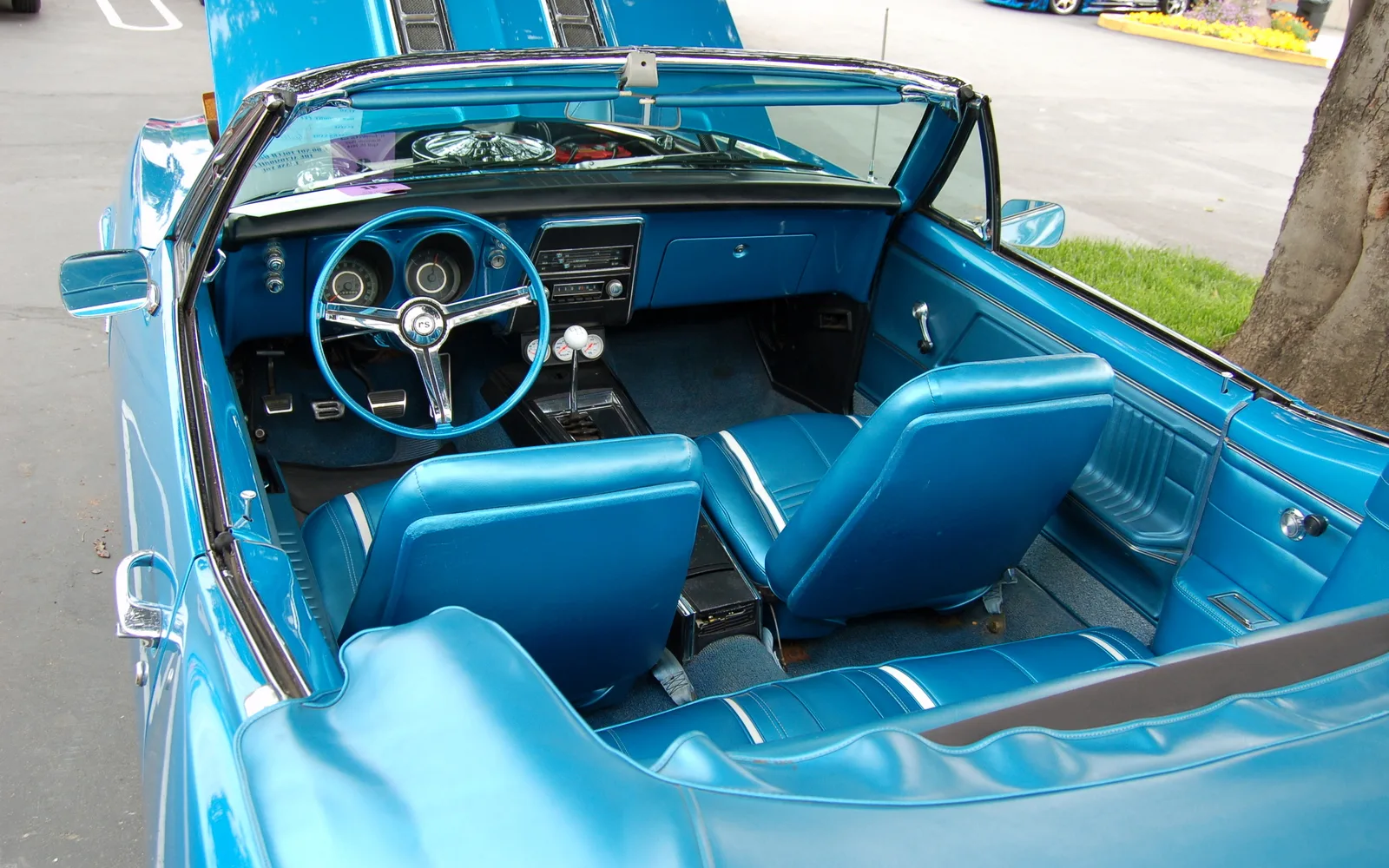
The selected photograph focuses on the interior of a classic car at a Modesto show. No driver or plate is visible, so the image emphasizes craftsmanship without identifying an owner or suggesting agency endorsement. The blue upholstery, dashboard, and open cabin demonstrate why restoration is as much about materials and detail as horsepower. It supports the local story without claiming that the car cruised a particular historic route or appeared in a particular film.
Cruising history highlights why vehicle use must be described rather than guessed. Storage, restoration work, agreed or stated value, annual mileage, transport on a trailer, organized-show attendance, modifications, and ordinary street driving can affect which questions belong in a review. An event permit or local tradition does not change the insurance contract by itself. The useful task is to match the current car and its real use to the application, then compare the resulting form without assuming that every classic vehicle follows the same pattern.
A restored show car can require questions that the civic history never answers. The owner should disclose where it is kept, who drives it, how far it travels, whether it is trailered, which modifications were made, and how value should be established after a total loss. California’s auto guide explains standard coverage categories, while collector or specialty contracts may handle use and valuation differently. The issued policy and endorsements control; a show registration, appraisal, or local tradition cannot substitute for their terms.